How Many Acoustic Panels Does Your Meeting Room Need?
16/01/2026
Why Meeting Room Acoustics Matter
Good acoustics aren't just a �nice to have� in meeting rooms. They directly affect:
Speech clarity - can everyone hear each other clearly?
Video calls - does your room sound professional to people on the other end?
Client impressions - does the room feel polished and well thought-out?
Fatigue - are long meetings tiring as people have to strain to hear?
Most modern conference and meeting rooms have hard walls, glass, screens and tables that reflect sound. Without room acoustic treatment, even small rooms can sound surprisingly poor.
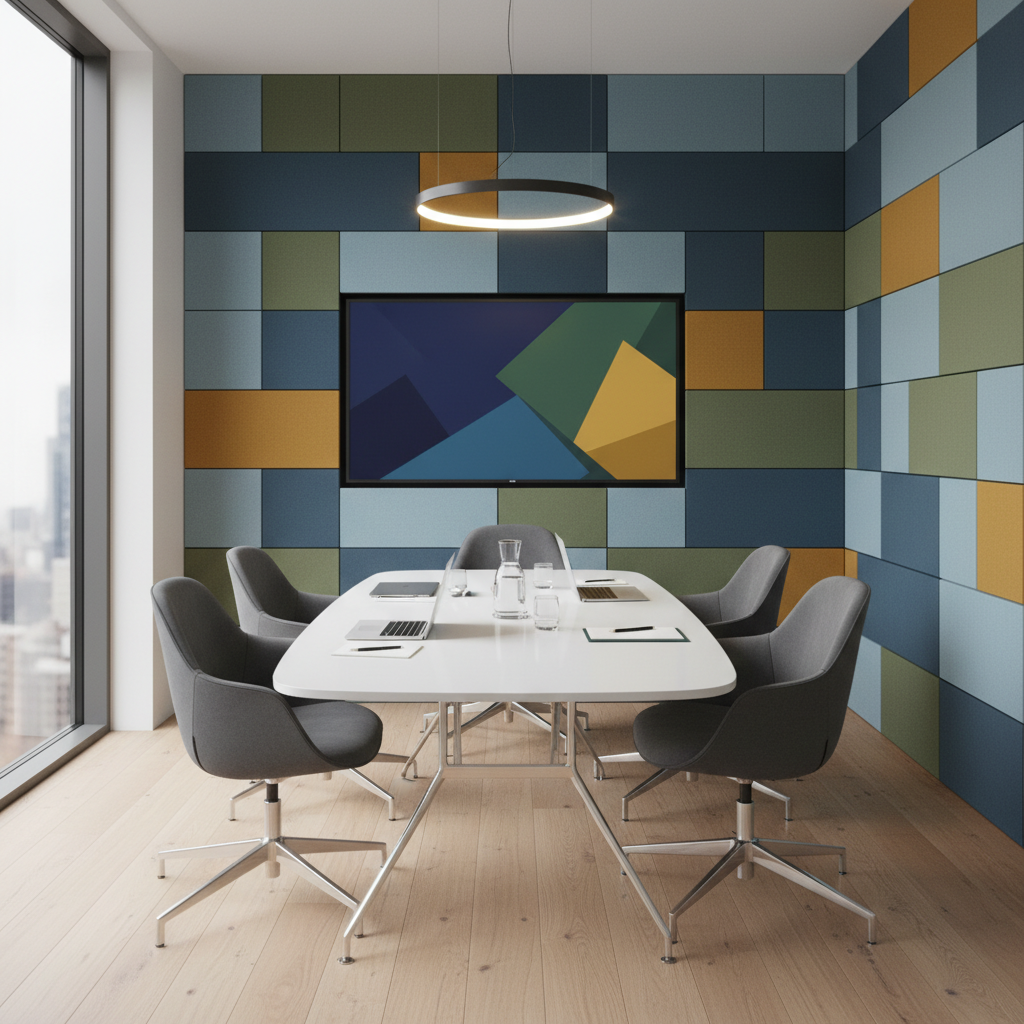
Simple Rules of Thumb for Acoustic Panel Coverage�
Every room is different, but as a starting point we frequently work with approximate coverage percentages. These are general guidelines rather than strict rules:
Small conference and meeting rooms (up to 4�6 people) Often benefit from sound-absorbing panels covering around 15�25% of the wall surface. This might be 4�6 panels according to their size and layout.
Medium conference and meeting rooms (6�10 people) Typically need 20�30% wall coverage. In some cases we'll also recommend ceiling panels if the room is particularly tall or reflective.
Larger conference and meeting rooms and boardrooms May require 25�35% coverage and a mix of wall and ceiling treatment to keep reverberation under control.
These figures are a starting point. The exact number of panels will depend on:
Room dimensions and ceiling height
How many hard surfaces there are (glass, concrete, etc.)
The type and performance of the panels you use
Where to Place Acoustic Panels in a Meeting Room
Placement is just as important as quantity. A few well-placed panels can be more effective than lots of panels in the wrong spots. We generally look at:
Walls opposite each other
Treating at least one pair of opposing walls helps reduce �flutter echo� - that rapid, ringing echo you hear when you clap.
Walls near the main seating area
Panels behind and beside the table help control reflections from people speaking.
Ceiling above the table
If wall space is limited or the ceiling is high, ceiling panels above the table can be very successful.
A simple test is to stand in the room, clap your hands and listen. Where you hear the strongest echo is usually where panels will make the biggest difference.
Example Meeting Room Setups
To make this more concrete, here are a couple of simplified examples:
Example 1: 3m x 4m meeting room (4�6 people) 4�6 wall panels, each around 2ft x 4ft, on two adjacent walls. Panels positioned roughly at ear height when seated.
Example 2: 4m x 6m boardroom (8�10 people) 6�8 wall panels distributed across two or three walls. 2�4 ceiling panels above the table if the ceiling is high or particularly reflective.
We'd adjust these recommendations based on your room photos, furniture layout and any specific problems you've noticed.
Getting the Right Answer for Your Room
While rules of thumb are useful, the best approach is always tailored. If you share:
Room dimensions
A few photos from different angles
A short description of the challenge (echo, call quality, etc.)
we can recommend:
How many panels you need
Which sizes and thicknesses will work best
Where to place them for maximum impact
The next step? Visit our Office Acoustic Panels page and send us your meeting room details. We'll provide a straightforward recommendation and quote, so you can be confident you're installing the right number of panels.
Previous: What Causes Poor Sound Absorption in Ceiling Mounted Office Panels?
Next: Steps to Fix Low-Frequency Noise Issues Using Wall Acoustic Foam Panels
Visit the Advanced Acoustics Ltd website for more information on How Many Acoustic Panels Does Your Meeting Room Need?
ENQUIRY FORM